Kyiv Residents Sleep in Metro Tunnels as 2026 Death Toll Tops 140
Shelter shortages and intensified strikes have forced the capital's population to improvise living spaces, while the military administration records a higher casualty count than in all of 2025.
By Elizabeth Morales ·
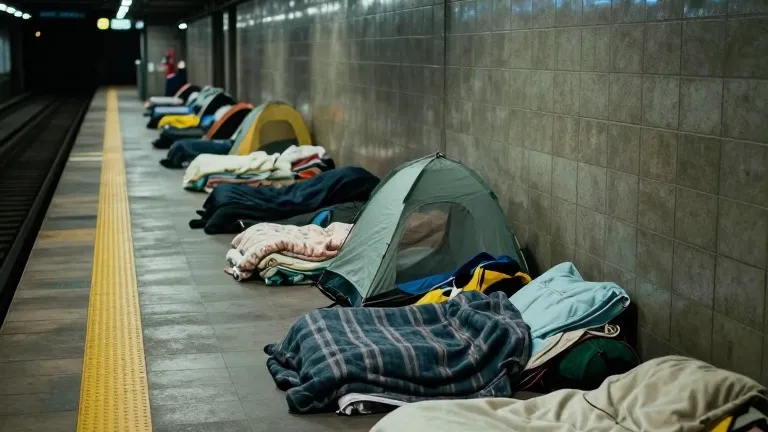
For years, Kyiv maintained a distance from the immediate violence of the front lines. That separation has dissolved as Russian attacks expand across the capital, transforming the city into a zone where daily routines are dictated by air raids and shelter capacity.
The strain on housing has pushed residents into underground infrastructure. With insufficient protected space for the city's four million inhabitants, subway stations function as dormitories. Starting around 10 p.m., adults and children lay out mattresses and erect small tents. Pets join their owners along the cold walls. Halyna, a resident of the Lukyanivka district, brings her five-year-old son, Roman, to the nearest station most evenings. "We're alive," she said. "We've been lucky once again."
Casualties include children and students. In September, a Russian drone struck an apartment building in the Pechersk district, killing 14-year-old Daniel Umanskyj while he did homework. Vlad, a neighbor in the hallway with his daughter, noted that their delayed arrival that day saved their lives. "These sick monsters don't care who they kill," he said. In early October, another drone hit a school building in southwestern Kyiv. Principal Valentyna Chorna said the school continues in-person classes for grades one through nine because its shelter holds more than 500 students.
The Kyiv military administration reported that 140 people were killed in the first eight months of 2026. This figure exceeds the 172 deaths recorded for the entirety of 2025. If the current pace continues, 2026 will become the deadliest year for the capital since the full-scale invasion began in 2022.
Infrastructure damage has disrupted supply chains and utilities. Strikes on warehouses have caused supermarket shortages comparable to those in the war's early months. Emergency power outages returned at the end of September, and a recent attack paralyzed the subway system. The city faces uncertainty regarding the reliability of heat, electricity, and water for the coming winter.
Local authorities have adjusted civil rules to manage the risk. The curfew now runs from 1 a.m. to 5 a.m. Some facilities operate during yellow alerts, which indicate missile threats, while red alerts require immediate sheltering. A survey by the Kyiv International Institute of Sociology found that 72% of residents said in September they are prepared to endure the conflict for as long as necessary.
Source: Deutsche Welle