Pakistan's Parliament Set to Pick New Prime Minister After Imran Khan Is Voted Out
Lawmakers are expected to choose opposition figure Shahbaz Sharif as premier, but economic woes and fresh political uncertainty loom after Khan's removal.
By Amy Swan ·
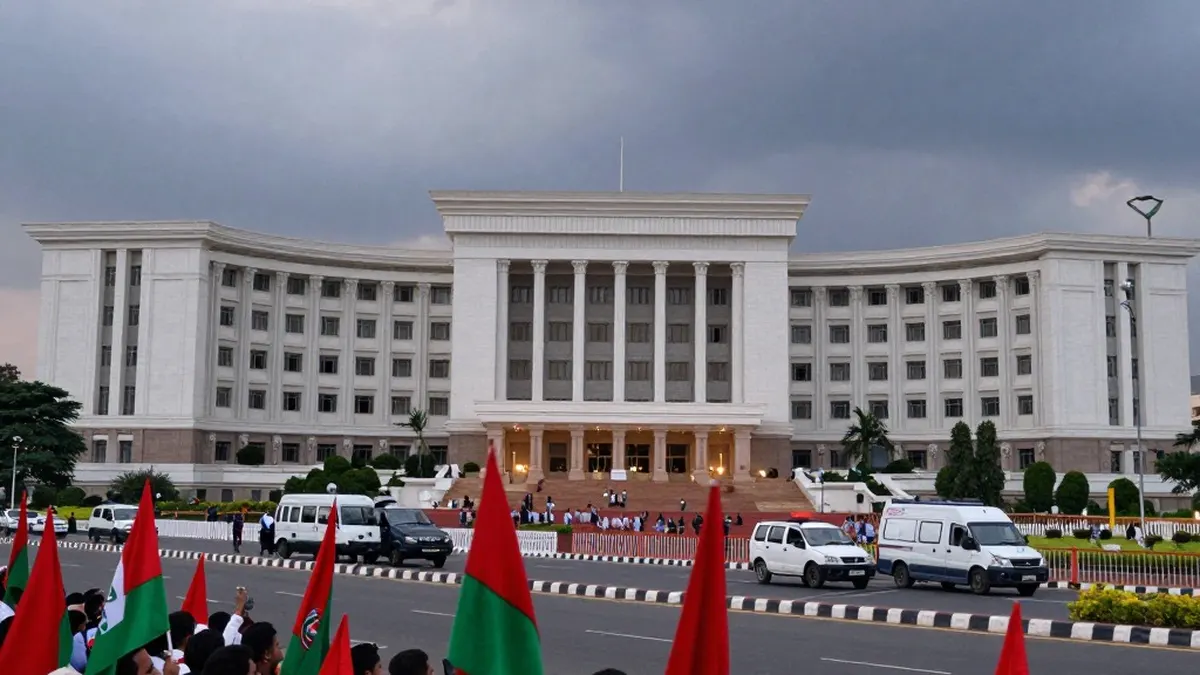
Pakistan's National Assembly is scheduled to elect a new prime minister on Monday, closing out a turbulent stretch that saw Imran Khan removed from office and a constitutional crisis averted only after the Supreme Court intervened.
Shahbaz Sharif, an opposition lawmaker and brother of former Prime Minister Nawaz Sharif, is the front-runner. The opposition has named him its candidate and says it has the votes to put him in the job. Even so, his election is not expected to settle the country's problems, which include high inflation and a worsening energy crisis.
Khan, a former cricket star, was ousted early Sunday after losing a no-confidence vote in Parliament. His time in office lasted three years and eight months. Abandoned by party allies and a key coalition partner, he was defeated by 174 votes, two more than the simple majority required in the 342-seat chamber.
Khan's party, Pakistan Tehreek-e-Insaf, has nominated former foreign minister Shah Mahmood Qureshi as its candidate. On Sunday, however, Qureshi complicated the picture by saying that many of the party's lawmakers were weighing whether to resign from Parliament after Monday's vote.
Late Sunday, Khan drew hundreds of thousands of supporters to rallies against his removal, calling the incoming administration an "imposed government." Marchers in cities across the country waved large party flags, and young people, who form the core of his base, dominated the crowds. Some wept while others chanted slogans promising his return. Khan is demanding early elections, although voting is not due before August 2023.
The crisis began April 3, when Khan avoided an initial no-confidence vote sought by the opposition by dissolving Parliament and calling early polls. The opposition, which accuses him of economic mismanagement, went to the Supreme Court. After four days of deliberation, the court ordered Parliament reinstated and the vote to proceed. A marathon session began Saturday and included the resignation of Speaker Asad Qaiser before Khan was finally removed.
Khan has accused the opposition of colluding with Washington to bring him down, allegedly because of a foreign policy that favored China and Russia. The claim resonates with younger supporters, who often view the U.S. war on terror after 9/11 as having unfairly targeted Pakistan. He also drew criticism for a Feb. 24 visit to Moscow, where he met Russian President Vladimir Putin as Russian tanks entered Ukraine. The U.S. State Department has denied any involvement in Pakistan's internal politics.
The opposition coalition faces its own challenges. It spans the political spectrum from the left to the radically religious, with the Pakistan Muslim League, headed by Sharif, and the Pakistan People's Party, co-chaired by the son and husband of slain former Prime Minister Benazir Bhutto, as its two largest members. For decades, a few wealthy and powerful families have dominated politics, with power usually alternating between the Sharif and Bhutto camps. Both have faced corruption allegations, and occasional convictions, and both have denied wrongdoing, calling the accusations politically motivated.
Nawaz Sharif was removed by the Supreme Court in 2015 over financial irregularities exposed in the Panama Papers leak, and was disqualified from holding office. Asif Ali Zardari, Bhutto's husband and president after the 2008 elections, has spent more than seven years in prison on corruption convictions. Khan took office in 2018 promising to end family rule, though opponents claimed he won with help from the military, which has governed Pakistan for half of its 75-year history.
Shahbaz Sharif has three times served as chief minister of Punjab, the country's largest and most influential province, home to 60% of Pakistan's 220 million people. Last week the provincial parliament elected his son Hamza as the new chief minister, ousting Khan's nominee. Khan's party is challenging that result, and the younger Sharif has not yet been sworn in.
Source: LAist