10,000 Robots: Tesla Launches 'Academy' to Train Humanoids at Scale
Tesla is deploying up to 20,000 Optimus units in a dedicated training environment to generate the AI data necessary for commercial release by late 2027.
By Joseph Jenkins ·
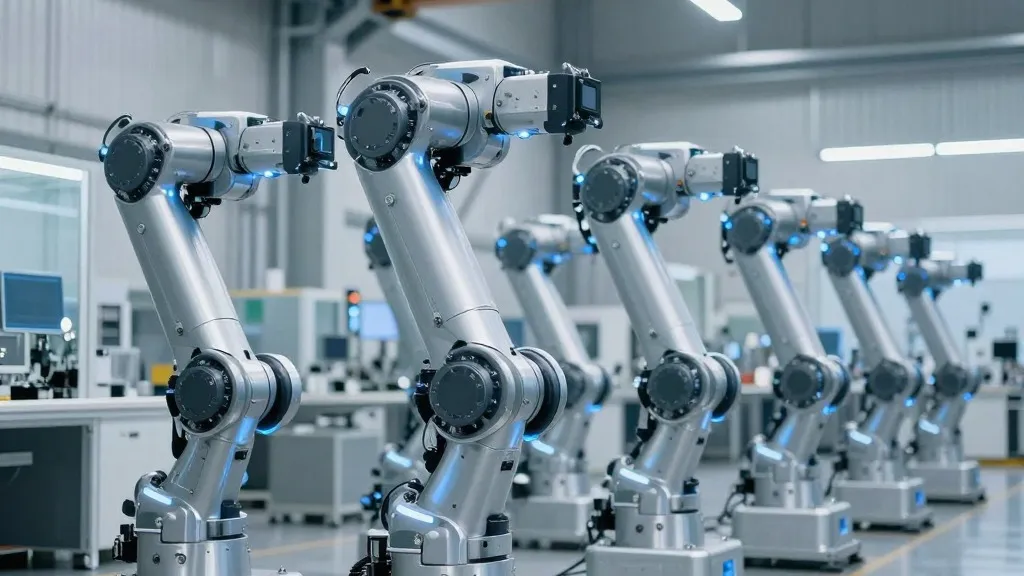
Tesla is fielding a workforce of 10,000 to 20,000 humanoid robots to generate the training data required for its next major product launch. This internal initiative, dubbed the Optimus Academy, serves as a critical workaround for a gap in the company's data collection strategy. Unlike Tesla’s automotive division, which benefits from millions of vehicles sending real-world driving data to engineers, the Optimus program currently lacks a vast fleet to learn from. Instead, every unit rolling off the production line will be assigned to this academy, where they will practice a wide array of tasks. The knowledge gained by these early units will be fed directly into the next iteration of the robot's AI model.
The physical infrastructure for this expansion is already operational in California. Tesla has converted the former Model S and X production space at its Fremont factory into a high-volume line for Optimus. The transition was completed in 46 days, clearing the way for a facility designed to handle one million units annually. According to the company’s third-quarter shareholder letter, the robots emerging from this line are the first to meet the quality standards of a commercial product. The manufacturer has confirmed that the current manufacturing process is suitable for mass-market release, marking a significant milestone in the transition from prototype to production.
CEO Elon Musk outlined the production trajectory during the earnings call, describing the ramp-up as a classic S-curve with an initial shallow slope. While output will increase gradually, Musk stated that most of the necessary equipment is already installed in Fremont. The goal is to climb toward an output of roughly 20,000 robots per week. This phased approach allows the engineering team to refine the robot’s electromechanical design, reliability, and service life. Tesla expects to complete these refinements by the end of next year, at which point it plans to begin delivering Optimus units to external companies for hazardous, repetitive, and 24/7 roles.
Hardware upgrades are also on the horizon to support these AI advancements. Tesla intends to integrate its AI5 chip into Optimus next year, significantly boosting processing capabilities. Musk indicated that a new video demonstrating AI-driven tasks, rather than preprogrammed motions, should be released within one or two months. This update is positioned as a direct counter to rival humanoid demonstrations that rely on scripted routines, which Musk argues lack the robustness required for real-world environments.
The supply chain is scaling in parallel with the software development. In September, Tesla certified Tuopu, Joyson, and Sanhua as mass production partners for key Optimus components. A much larger dedicated facility is also under construction at Giga Texas, where recent drone footage shows the steel frame nearing completion. Musk has set a long-term target for that plant at 10 million robots per year. Executives noted that Optimus production costs are trending toward the manufacturing cost target of the Cybercab, indicating the design is engineered for volume from the outset. The robot’s hands remain the most challenging component, and they currently command the bulk of the engineering effort.
The next phase of the rollout will focus on external deployments. Once the internal refinement period concludes, Tesla will begin shipping robots to outside businesses. These initial customers will likely be those with high-risk or repetitive labor needs, providing a practical testing ground for the AI models trained in the academy. The integration of the AI5 chip and the expansion of the Giga Texas facility will underpin the long-term growth strategy, aiming to establish Optimus as a standard industrial tool rather than a niche novelty.
Source: Teslarati · original report published