Cyan Lights: The 1 Color Federal Regulators Want on Robotaxis
NHTSA proposes a specific blue-green marker lamp to signal when a vehicle is operating in autonomous mode, aiming to standardize visual cues for road users.
By Joseph Jenkins ·
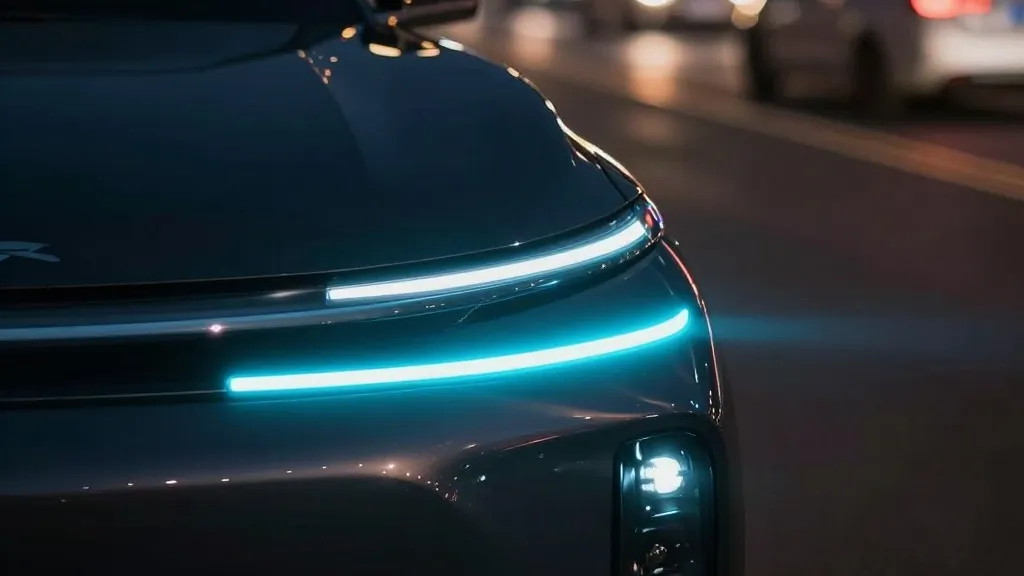
The long-standing debate over how driverless vehicles should communicate their operational status to the rest of the traffic grid has finally reached a concrete conclusion. Federal regulators have moved to end the speculation by proposing a single, distinct visual signal for autonomous vehicles: a cyan-colored light. This move aims to replace the fragmented array of ideas that have circulated in the industry for years, which included flashing text displays, audio alerts, and various custom lighting configurations. By settling on a specific blue-green hue, the National Highway Traffic Safety Administration is attempting to create a universal language for robotaxis that is immediately recognizable to both law enforcement and other drivers.
The proposal involves rewriting parts of Federal Motor Vehicle Safety Standard No. 108 to accommodate the unique needs of automated driving systems. The agency argues that the current automotive lighting palette is already crowded with established meanings. Red is reserved for braking, amber for turn signals, white for headlights, and flashing blue or red lights for emergency vehicles. Introducing cyan would theoretically fill a visual gap without causing confusion among road users who are already trained to interpret these standard colors. This standardization is intended to ensure that when a human is not at the wheel, the vehicle’s status is clear and consistent regardless of the manufacturer.
There is existing precedent for this type of signaling, though it has been limited. Mercedes-Benz previously received state-level approval to use turquoise lights on its Level 3 Drive Pilot vehicles. However, the automaker later abandoned that specific hardware in favor of a Level 2++ system. Despite this shift, the federal government sees an opportunity to set a national baseline. The goal is to provide a uniform framework that major players in the sector, including robotaxi operators like Waymo, Nuro, and Zoox, as well as traditional automakers like GM and Mercedes, can adopt. This would prevent a situation where different companies use different colors or patterns to signal the same thing.
Under the proposed rule, the installation of these cyan marker lights would remain optional for manufacturers. However, the regulatory value lies in the standardization. By defining specific requirements for the color, brightness, and physical location of the lamps, the agency ensures that any company choosing to implement the feature does so in a legal and consistent manner. This approach avoids the potential chaos of a mixed market where drivers might see different types of lights on different autonomous vehicles, potentially leading to misinterpretation of the vehicle's mode of operation.
The update goes beyond just adding new lights; it also involves removing outdated requirements that do not apply to vehicles without human drivers. Current rules mandate the presence of physical hazard switches, manual beam shifters, and turn levers inside the cabin. Since these controls are often redundant in a fully autonomous setup, the agency proposes eliminating these requirements. Additionally, the testing standard for 12.8-volt systems is being updated to allow automakers to build around modern LED architectures without navigating excessive administrative hurdles. The agency is also considering removing rules that dictate the physical positioning of high-beam lights relative to low-beam lights, further simplifying the design process for new vehicle platforms.
This regulatory shift is part of a broader administrative push by the Department of Transportation to streamline the deployment of autonomous vehicles. The government recognizes that traditional controls like steering wheels and pedals are designed for human operation and can complicate the engineering of driverless cars. By easing these constraints, regulators hope to facilitate faster adoption of new technologies. However, the process is not without friction, as the agency continues to enforce existing rules while simultaneously proposing changes.
Tensions between new proposals and current enforcement remain evident. Just last month, the National Highway Traffic Safety Administration opened an audit query regarding the Tesla Cybercab. The inquiry aims to examine the technical data and processes Tesla relied upon when certifying the vehicle. The specific issue at hand is the absence of certain design features, such as sideview mirrors, pedals, and a steering wheel, which are currently required under the Federal Motor Vehicle Safety Standards. This action highlights the ongoing challenge of transitioning from a regulatory framework built for human drivers to one that accommodates automated systems.
For readers in California, where the majority of robotaxi operations are currently concentrated, this proposed standard could significantly impact the daily experience of sharing the road with autonomous vehicles. If adopted, the cyan light will serve as a simple, visual cue that the car is in autonomous mode. While the rule is still in the proposal stage, it signals a clear direction for the industry. Manufacturers will now have a definitive target for their next generation of autonomous hardware, potentially leading to more uniform and predictable interactions between robotaxis and the rest of the traffic ecosystem in the coming years.
Source: The Verge · original report published