Gaza Sisters Rotate Homes After Mother Killed In Tent Strike
The Palestinian Ministry of Social Development's orphan registry counts 54,468 children who have lost one or both parents since October 2023.
By Elizabeth Morales ·
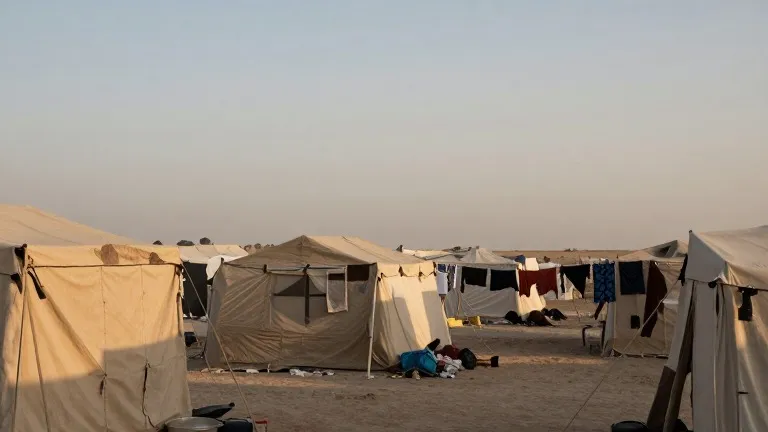
Two days after Mariam, Aya and Jebril Abu Asser settle into a tent, their aunt packs their things and moves them to another relative's shelter in Deir al-Balah. The three siblings have repeated this rotation since the nineteenth day after the ceasefire took effect on 10 October 2025, when an Israeli bomb struck the makeshift shelter where their mother, Islam, lived and killed her in front of them. Their father had died in Israel's 2014 offensive on Gaza. Jebril, now 12, was sitting in his mother's lap when the strike hit and was injured himself.
The Palestinian Ministry of Social Development in Gaza counts 54,468 children who have lost one or both parents since October 2023. The territory's registry lists at least 64,000 widows and 71,000 orphaned children, a total that includes people bereaved in earlier Israeli military attacks on Gaza. Registration records also show about 3,000 children with no registered guardian, custodian or caregiver.
Their aunt Warda al-Muzeini said the children have no fixed address. They stay mainly with their paternal grandmother and spend two nights at a time with each maternal aunt. Muzeini lost her husband in an Israeli air strike and raises four children without a job or reliable income. She said she struggles to give them one meal a day. Another sister is also a widow, and the women divide the costs: one buys pyjamas, another slippers, another supplies pocket money for a few days.
Aziza al-Kahlout, a spokesperson for the ministry, said the registry cannot record what families go through daily. A child who has lost both parents, she said, loses care and safety along with schooling and childhood, and is forced to carry responsibilities beyond their years. Kahlout warned of "deeply alarming signs of growing risks of child labour, school dropout and early marriage in Gaza," driven by poverty, displacement and the loss of family breadwinners.
Wafaa al-Attar was 10 years old on 22 February 2024 when she left her home in Deir al-Balah to charge her father's phone at her uncle's house. A blast destroyed the building where her family was. It killed her father, Ahmed; her mother, Khouloud; and four siblings: Rital, eight, Muhammed, five, Obada, three, and Yazan, nine months. Attar, now 13, was treated for minor shrapnel injuries. She lived first with her grandparents, then with her uncle, his wife and their newborn. "For months, I wished I had been with them in the house when it was bombed," she said. "I wished I had been killed with them." She later added, "But of course, I know that no one could ever replace my own family."
Source: Middle East Eye