Israel Votes as 74,000 Gaza Deaths Shape the Ballot
The first election since the 2023 Hamas attack features a right-wing contest where the war's human toll and the status of the occupied West Bank remain central to the policy debate.
By Chloe Kapoor ·
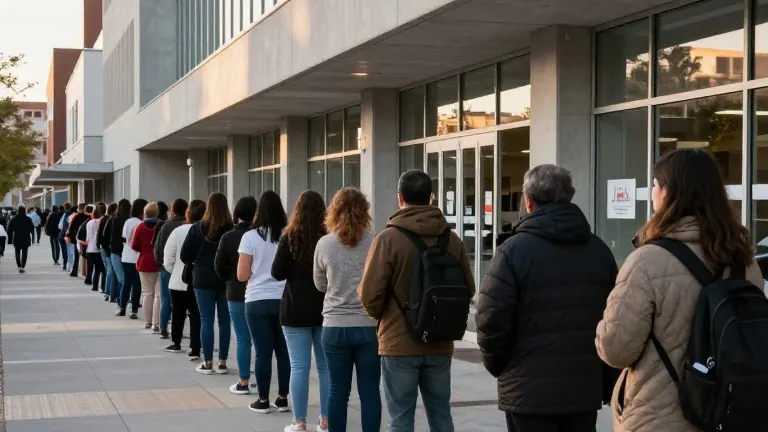
Israelis cast ballots on Tuesday in the first national election since the Hamas-led attack of October 7, 2023. The vote determines the direction of a government that has overseen a war resulting in the death of more than 74,000 people in Gaza and military operations across the region.
Prime Minister Benjamin Netanyahu, the country's longest-serving leader, seeks a fourth term. He currently heads the most right-wing governing coalition in Israeli history, which includes far-right ultranationalist and ultra-Orthodox parties. His opponents form a Zionist bloc that has adopted a similar right-wing approach to national security and foreign policy.
The political rightward shift predates the 2023 conflict. Analysts point to the collapse of the peace process and recurring security crises over the last few decades as factors that eroded the political center. A key milestone was the 2018 Nation-State Law, which formally enshrined Jewish supremacy and facilitated the expansion of settlements in occupied Palestinian territory.
The current government accelerated these trends. It attempted to strip the Supreme Court of its power to review government actions and defied rulings regarding the military conscription of ultra-Orthodox men. These moves relied on the support of National Security Minister Itamar Ben-Gvir and Finance Minister Bezalel Smotrich, who helped sustain the coalition while overseeing a surge in violence in the West Bank.
Netanyahu faces legal pressures in addition to the political contest. He is on trial for bribery, fraud, and breach of trust, charges he denies. The International Criminal Court also wants him on charges of war crimes in Gaza. His challengers, including former Defense Minister Gadi Eisenkot, argue that a new government would restore a respect for process and the rule of law.
Ahron Bregman, an Israeli analyst at King's College London, noted that a change in leadership would primarily alter the political atmosphere. He described Netanyahu as a deeply divisive figure who inspires intense admiration and hatred. Bregman cautioned that any new government would still reflect the sharp rightward turn that occurred after the October 7 attack.
The election does not offer voters a direct referendum on the war in Gaza. No mainstream candidate has proposed including Arab-led parties in a potential governing coalition. References to leaders of Ra'am or the Joint List are typically used by rivals to criticize each other for considering past or future coalitions with Palestinian politicians.
Yehouda Shenhav-Shahrabani, an Israeli sociologist, stated that the political system operates within a framework of Jewish supremacy. He argued that the exclusion of Arab-led parties, which represent one-fifth of the population, is a structural feature of the state. This dynamic means the choice between candidates is not between democratic and anti-democratic forces, but between different approaches to the treatment of Palestinians.
Daniel Levy, a former government adviser, said the campaign focuses on competence and accountability for security failures rather than the war itself. He noted that treating Palestinians is a consensus among Zionist parties, with differences resting on whether the state or settler militias should lead the effort. The next government will inherit a mandate to continue these policies.
The result will determine whether Israel retains a Netanyahu-led government or transitions to a new leadership. Either outcome leaves the occupation of the West Bank in place, with the potential for further annexation or population displacement. The vote concludes a campaign that has been defined by a lack of clear alternatives to the right-wing status quo.
Source: Al Jazeera