Judge weighs special master role in California voter roll dispute
District Judge David O. Carter suggested an independent evaluator could assess the Justice Department's claims regarding 20,000 alleged noncitizen voters before the state certifies results.
By Joseph Jenkins ·
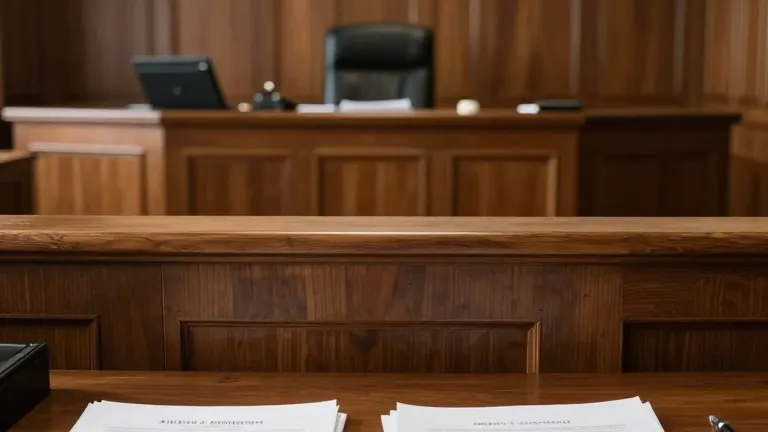
U.S. District Judge David O. Carter indicated on Tuesday that he is considering appointing a special master to review claims by the Trump administration regarding California’s voter rolls. The judge presided over a hearing in a lawsuit filed by the Justice Department, which seeks to prevent California from counting ballots from individuals it alleges are noncitizens.
Carter stated that deciding the case without an independent evaluator would be too rushed. He suggested the special master could complete the evaluation before the state’s December 11 deadline to certify election results. The judge said he would not issue an official order until Wednesday.
The dispute centers on a list of 20,000 people that the federal government says are likely noncitizens. The Justice Department sued California election officials in mid-October, accusing them of missing a 48-hour deadline to review the list. The administration argues that state officials must separate any ballots belonging to these individuals before counting them.
California officials contend that the logistical process makes separation impossible for mail ballots that have already been returned. They note that once a ballot is returned, it is separated from the envelope containing voter identification. More than 3 million ballots have already been returned in the state. M. Patrick Moore, a lawyer for the Los Angeles County registrar’s office, argued that the county would cooperate if the federal government pursued criminal prosecutions against noncitizens who illegally voted.
Carter expressed skepticism about the administration’s strategy. He asked why the government was suing California rather than addressing the issue through criminal prosecutions. He referenced the recent arrest of 28 people in October across the state who were accused of illegally registering to vote. Carter told the bench, “You got a remedy for goodness sakes, go out and indict.”
The judge also warned local officials against threats of criminal prosecution. He stated that the court believed it would be wise for such threats to cease immediately. Carter left the courtroom shortly after making the remark. He emphasized his concern that siding with the federal government at this stage could result in illegal changes to election procedures while voting is underway.
First Assistant U.S. Attorney Bill Essayli argued that the Justice Department’s demands would not significantly disrupt the ongoing election. He stated, “We have not asked to void any ballots.” Essayli said the government was seeking to work with California officials to safeguard the election. He told the judge that the case rises and falls on the credibility of the flagged names.
The hearing focused heavily on the reliability of the federal list. California lawyers argued that the government had not specified how or when it obtained the voter file. They questioned the government’s reliance on a private third-party service to determine Social Security numbers. Los Angeles County officials found that a small sample of people on the list were indeed citizens.
A federal agent who conducted the investigation stated in an affidavit that the county’s findings were false. The investigation required roughly 800 federal employees to manually check each name. The filing conceded, however, that some names of citizens could have been mistakenly included.
Voting has been underway for weeks in California’s midterm election, which concludes next Tuesday. The administration has made alleged voting by noncitizens a key focus, with control of Congress at stake. The 20,000 people on the DOJ list constitute a small fraction of California’s 23 million voters.
Source: KGTV