Tesla Halts Cybertruck Plans for Australia and New Zealand, Ending Seven-Year Wait
The electric vehicle maker has officially voided reservations in the region, offering refunds and a subscription incentive to shift focus to other models.
By Chloe Kapoor ·
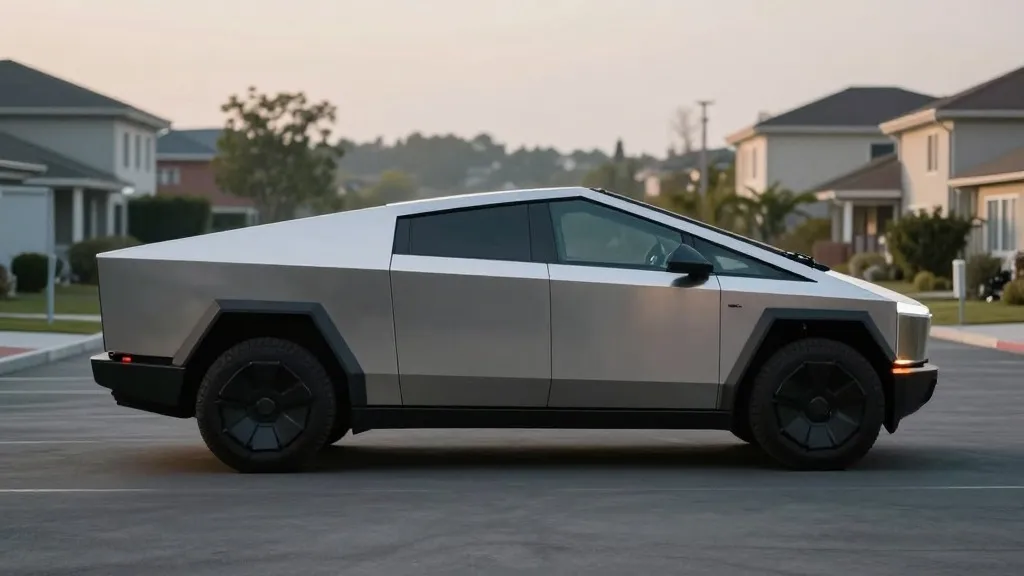
For nearly seven years, consumers in the Asia-Pacific region have waited for the arrival of Tesla’s signature electric pickup truck, a product that was heavily marketed despite significant technical hurdles in its home markets. Today, that period of anticipation has concluded abruptly, as the automaker formally announced the cessation of Cybertruck production for Australia and New Zealand.
The decision was communicated via email to reservation holders this morning, confirming that the orders previously placed are now void. Tesla stated that after careful consideration, the plans to manufacture the vehicle for these specific territories have been discontinued. Consequently, the company is unable to fulfill the existing reservations and is proceeding with their cancellation. This move comes just one day after Tesla released its financial results for the third quarter of 2026, signaling a strategic pivot away from this particular vehicle line in the region.
The financial implications for affected customers are straightforward, with Tesla promising a full refund for all payments made toward the reservation. These refunds are expected to be processed within thirty days. To mitigate the impact of the cancellation, the company is offering a complimentary one-year subscription to its Full Self-Driving (Supervised) software. This incentive is available to reservation holders who choose to purchase a new Model 3 or Model Y, effectively attempting to convert the cancelled pickup truck orders into sales of sedans and SUVs that are already manufactured in right-hand drive configurations.
The roots of this delay stretch back to November 2019, when Australian customers began placing deposits of A$150 to secure their spot in the production queue. At the time, the vehicle was projected to be a mass-market success, and early crowdsourced surveys suggested Australia would become the third-largest market for the Cybertruck, trailing only the United States and Canada. By 2023, total global reservations for the truck were estimated at approximately two million units, with Australia holding a small but significant percentage of that total, though Tesla never officially confirmed these regional breakdowns.
The path to today’s announcement was marked by long periods of silence and shifting timelines. In May 2022, Tesla quietly removed the Australian reservation page, replacing it with a button to receive updates, but did not initiate refunds at that time. Throughout 2024, the vehicle was shipped to the region for display tours, and CEO Elon Musk told shareholders that certification for other markets might be possible in the following year. However, that year passed without a right-hand-drive version being produced, leaving Australian buyers waiting for a truck that remained exclusively left-hand drive.
The primary obstacle has always been the vehicle’s orientation. The Cybertruck is designed solely for left-hand-drive markets, whereas Australia, New Zealand, the United Kingdom, and Japan require right-hand-drive vehicles. Additionally, Australia mandates that vehicles be certified under its own specific design rules. For a truck already facing demand challenges in North America, the cost of re-engineering the vehicle for two markets combined for a population of approximately 33 million people proved difficult to justify.
Recent sales data underscores the difficulty of sustaining a separate right-hand-drive production line. In the third quarter of 2026, Tesla delivered 8,295 units categorized as “Other Models,” a segment that now consists almost entirely of Cybertrucks since the production of the Model S and Model X ended. Analysts estimate that Cybertruck sales in that quarter ranged between 7,000 and 8,000 units, translating to an annual pace of roughly 30,000 vehicles. This volume is significantly lower than the production line’s capacity of 250,000 units annually, making the investment in regional adaptation financially challenging for the company’s leadership.
The cancellation reflects a broader trend in Tesla’s international strategy, which has focused on left-hand-drive markets such as South Korea, the UAE, Saudi Arabia, Qatar, Jordan, and Israel. The vehicle remains blocked from the European Union largely due to pedestrian safety concerns. As the Cybertruck transitions into a niche product primarily for the North American market, Tesla appears to be consolidating its efforts on vehicles that can be more easily adapted for global distribution, leaving Australian and New Zealand customers to look toward the Model 3 and Model Y for their next electric vehicle purchase.
Source: Electrek · original report published
More Business · Buyer Beware · Report a business · Got a Story?