Albanian Capital Erupts as Police Deploy Force to Break Up Massive Protest
Violent clashes in Tirana left hundreds injured and dozens arrested as thousands demanded change in a nation struggling with high costs and political anger.
By Joseph Jenkins ·
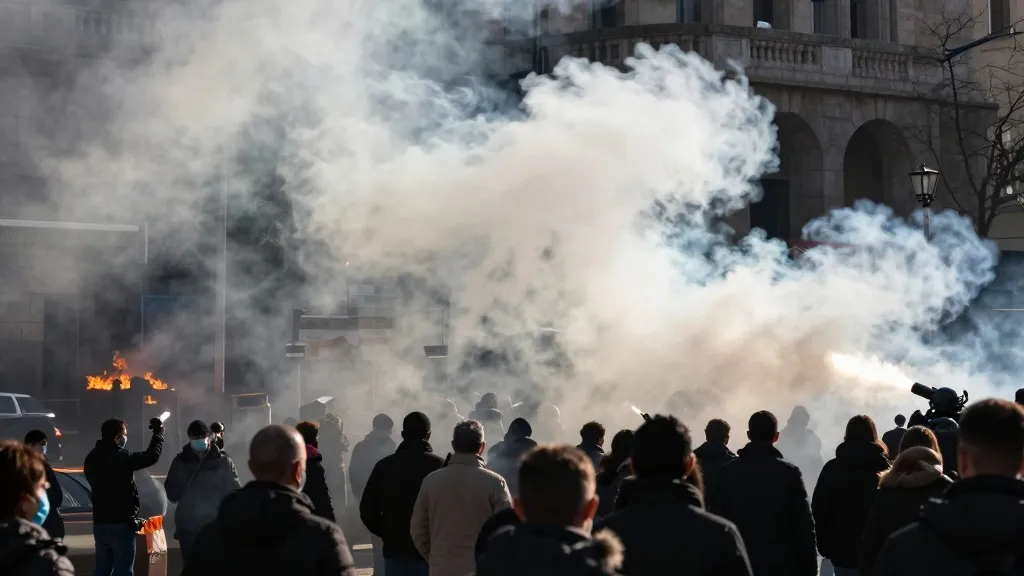
The calm in Tirana broke on Saturday as police unleashed tear gas and water cannon against a massive crowd. The scene turned chaotic when the antigovernment rally descended into violence. Authorities reported that more than 300 people were injured. This group included both protesters and police officers. Dozens of demonstrators were also taken into custody. The unrest struck at the heart of the capital, with several government buildings coming under attack.
This latest flare up is part of a larger wave of discontent. Protests began in mid-October over poor conditions in schools. High living costs in the small Balkan country added fuel to the fire. Clashes between demonstrators and police have become a regular feature since then. While tensions seemed to ease in the days leading up to Saturday, the rally on the capital brought the conflict back with full force.
Organisers called on students and citizens from across Albania to join the march. Thousands responded to the summons. Police prepared for a large turnout by stepping up security around the city. Local media reported that officers conducted checks on cars entering the capital. The deployment of force was significant. Police used water cannon, tear gas, and rubber bullets to push back the crowds.
The rally was not just a student movement. A wide coalition of groups announced their support. University professors, artists, and opposition parties joined the call for change. This broad base of support signaled that the anger had spread beyond the immediate issues of education and prices. It reflected a deeper frustration with the current leadership.
The Ministry of Education became the center of the action. Protesters viewed it as a key symbol of the government’s failures. During the Saturday rally, some members of the crowd threw stones at the building. Others rolled burning trash bins toward the structure. The physical attacks on the ministry highlighted the intensity of the demonstrators' demands.
The roots of this political crisis go back to May. News broke about a luxury hotel project linked to the family of US President Donald Trump. That revelation sparked intermittent antigovernment protests. Over time, public anger grew into a wider campaign. The focus shifted to corruption and the high cost of living. Protesters are now calling for the resignation of Prime Minister Edi Rama, a Socialist leader.
Prime Minister Rama has offered his own explanation for the turmoil. He has blamed foreign actors for driving the violence. Specifically, he accused Russia and Iran of spreading online misinformation. Despite this, the prime minister has also called for dialogue to resolve the standoff. On Saturday, red cushions were placed outside the government headquarters. This was a symbolic invitation to talk.
The symbolic gesture did not go unnoticed by the crowd. Protesters later set the red cushions on fire. The act seemed to mock the invitation to negotiate. The demonstrators have placed blame on the entire political class for the current crisis. Signs held by some in the crowd criticized Rama’s main rival. This included centre-right leader Sali Berisha, showing that the anger is not limited to one side of the political divide.
The situation in Albania remains fluid. The use of force on Saturday has raised the stakes for both sides. The government faces pressure to address the cost of living and corruption. Meanwhile, the protest movement has shown it can mobilize diverse groups across the country. The next steps in this confrontation are uncertain, but the tension in Tirana is palpable.
Source: Al Jazeera