Shin Bet Assumes Control of Gadi Eisenkot Security Detail
The domestic security agency will now direct private guards for the Yashar party chairman following a review of threat intelligence.
By Chloe Kapoor ·
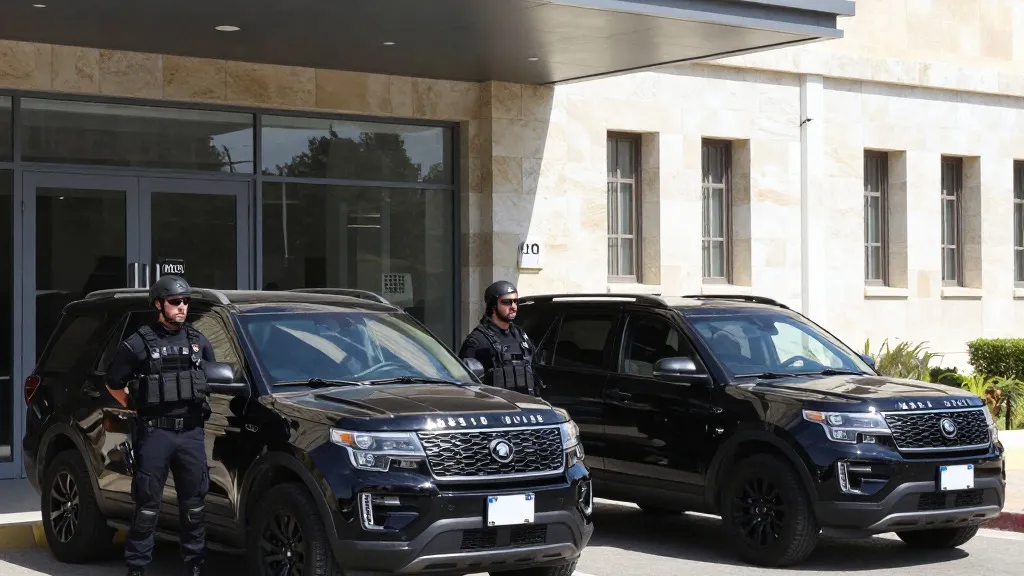
Israel’s domestic security service, the Shin Bet, is taking direct command of security operations for Gadi Eisenkot, the chairman of the Yashar political party. The transition begins on Sunday, marking a significant shift in how protection is managed for senior political figures who do not hold formal state office. The Yashar party announced the change in a public statement, confirming that a private security firm will continue to provide physical guards for Eisenkot starting Sunday morning. However, these contractors will now operate under the direct instruction and oversight of Unit 730, the Shin Bet’s elite unit responsible for personal security arrangements.
This development concludes a lengthy process in which party leaders have sought enhanced state protection. In August, David Zini, the head of the Shin Bet, initially concluded that Eisenkot did not meet the specific criteria required for protection by Unit 730. That determination was reversed in September after the Advisory Committee for Personal Security conducted a fresh review. The committee examined updated intelligence reports and threat assessments specific to the Yashar leader. Based on this new information, the committee recommended that the Shin Bet assume full oversight of his security detail, leading to Zini’s final approval.
Despite the earlier approval by Zini, the Yashar party indicated in September that a security detail had not yet been physically assigned to Eisenkot. The announcement this week clarifies that the operational framework is now in place. The agency has outlined a comprehensive set of measures for party leaders that includes an intelligence oversight and support framework provided by dedicated intelligence units. Additionally, the arrangement permits security teams hired by party leaders to carry weapons, subject to specific protocols. The Shin Bet will coordinate directly with these private teams and conduct periodic situation assessments to monitor the evolving threat level facing each leader.
The legal basis for these arrangements stems from authorization granted to Zini by the Ministerial Committee for Shin Bet Affairs. This committee empowered the Shin Bet chief to establish security protocols for party leaders who do not hold public office and are therefore not otherwise entitled to standard state protection. This specific authorization remains in effect until the next Knesset is sworn in, providing a temporary but structured safety net for political figures during this transitional period.
The decision to protect Eisenkot was not automatic for all party leaders seeking similar coverage. Yair Golan, the chairman of The Democrats, also petitioned the Shin Bet for protection. Golan cited a threat level that he argued was comparable to that of Eisenkot. However, the security agency has denied him immediate protection at this stage, highlighting that the approval process involves a detailed, case-by-case evaluation of intelligence and risk rather than a blanket policy for all opposition leaders.
The shift in Eisenkot’s security arrangement reflects the agency’s response to changing intelligence landscapes. By placing private guards under the direct instruction of Unit 730, the Shin Bet ensures that tactical decisions are aligned with the latest threat assessments. This integrated approach allows for better coordination between state intelligence and private contractors. It also provides a standardized method for evaluating the safety of political figures who operate outside the traditional hierarchy of state-protected officials.
For the Yashar party, the move provides a sense of institutional backing for its leadership. The party had long advocated for clearer security guidelines for its members. The implementation of these measures on Sunday will likely involve a brief period of adjustment as the private security firm integrates into the Shin Bet’s command structure. The agency will continue to monitor the situation, with periodic assessments serving as the primary tool for adjusting the level of protection as needed.
This arrangement sets a precedent for how the Shin Bet may handle future requests from other party leaders. While the current authorization is tied to the existing Knesset term, the framework established for Eisenkot’s protection offers a model for future evaluations. The agency’s willingness to override its initial assessment based on updated intelligence demonstrates a flexible approach to risk management. This flexibility is crucial in a political environment where threat levels can fluctuate rapidly based on public statements, internal party dynamics, or external geopolitical events.
The transition to Shin Bet oversight is expected to proceed without major disruption to Eisenkot’s daily schedule. The private security company will continue to provide the physical presence, but the strategic direction will now come from state officials. This dual-layered approach aims to balance the immediate need for physical security with the broader intelligence picture. As the Knesset term progresses, the Ministerial Committee may revisit these arrangements, but for now, the focus remains on maintaining a secure and coordinated protection detail for the Yashar chairman.
Source: The Jerusalem Post
More Politics · World news · Report a business · Got a Story?