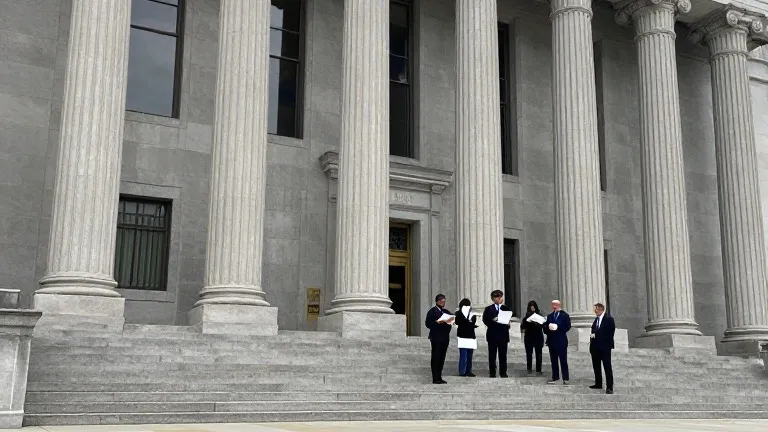
Families of the Fallen Set 100-Day Deadline for Social Cohesion Framework
Initiative led by bereaved relatives demands new cabinet draft national unity measures before its first hundred days end.
By Joseph Jenkins ·

A coalition of Israeli families who lost members in the recent conflict has established a 100-day deadline for the next government to draft a national framework for social cohesion. The group, known as Hamechane, argues that addressing internal division is a matter of national survival, not just political preference. They seek to institutionalize a culture of mutual respect before the new cabinet settles into its routine.
The initiative brings together bereaved relatives, captivity survivors, and wounded soldiers. Their goal is to transform social unity from an abstract ideal into a state responsibility. This demand comes ahead of upcoming elections, positioning the issue as a central test for the incoming leadership.
The group’s origins trace back to the grief shared by families after October 7, 2023. Moshe Shapiro, whose son Aner died protecting festival attendees, leads the effort. He joins Hoda Daxa, whose husband was killed in Gaza in 2024, and Shai Zohar, the uncle of a New York-born soldier killed on the same day as his son. These individuals formed a core group to address the fractures that preceded the war.
Shapiro cites the wildflower protection campaign of the 1960s as a historical model. That initiative combined legal safeguards with public education, embedding the cause in the national consciousness over decades. He proposes a similar approach for social cohesion, aiming to make respect for differing views a standard part of civic life.
Zohar described internal polarization as the state's most severe existential risk. He argued that pre-war divisions weakened the country’s resilience. "Unity is an operating system, an approach," Zohar stated. He noted that the nation has already paid a high price for this division and cannot afford to retreat to old patterns.
Daxa highlighted the everyday challenges of belonging in a diverse society. She recalled feeling discomfort from fellow passengers when speaking Arabic on a train. "Hatred doesn't distinguish," she said. She emphasized that unity must extend beyond the Jewish majority, including communities like the Druze, whose members serve in the military.
The group spent a year developing a shared vision across religious, secular, and political lines. Members include individuals from the Right and Left, as well as Haredi and Druze communities. Shapiro noted that participants maintained their distinct views while finding common ground. He recalled his grandfather’s advocacy for coalition governments in the 1960s, a precedent for broad national consensus.
Hamechane proposes several practical steps, including educational programs in schools and workplaces to teach listening skills and community awareness. The group also calls for measures to counter inflammatory online activity. They have left the specific structure of the implementing body to elected officials, focusing instead on the mandate for action.
The framework must be drafted within the first 100 days of the new government's term. This timeline is intended to prioritize the issue before other legislative agendas take hold. The group believes that recognizing polarization as a national danger is the first step toward resolution. They are not asking for uniformity, but for a structured effort to maintain mutual obligations despite deep disagreement.
Source: The Jerusalem Post
More Politics · World news · Report a business · Got a Story?