SpaceX Stock Surges on AI Boom
Investors reacted strongly to a quarter where artificial intelligence revenue outpaced traditional launch services, leading to a significant reassessment of the company's valuation.
By Elizabeth Morales ·
A significant tension emerged in the market as Wall Street grappled with the sheer scale of SpaceX's recent financial performance. The company, long defined by its rocket launches and satellite internet, has rapidly evolved into a major player in artificial intelligence. This shift created a disconnect between historical expectations and current reality, forcing analysts to scramble to recalibrate their outlooks. The result was a wave of upward revisions that signaled a fundamental change in how investors view the firm's future.
The numbers behind the movement are striking. SpaceX reported third-quarter 2026 revenue of $14.6 billion, a 161 percent increase over the same period last year. This figure comfortably exceeded the consensus estimate of approximately $12.7 billion. Profitability also saw a dramatic turnaround. The company posted a net profit of $4.4 billion, reversing a loss from the prior year. Adjusted EBITDA reached $8.8 billion, underscoring the operational efficiency of its new business lines.
The primary driver of this growth is the Super Intelligence division, which now accounts for the largest share of revenue. This segment generated roughly $7.6 billion, representing an 830 percent year-over-year surge. The Connectivity segment, centered on Starlink, contributed $5.2 billion. Subscriber additions were strong, lifting the consumer base to 13.6 million users. These figures illustrate a dual-engine growth model where both legacy and emerging technologies are scaling rapidly.
Leadership provided specific guidance that further fueled the optimism. During the earnings call, CEO Elon Musk and CFO Bret Johnsen outlined revenue projections for the first quarter of 2027. They estimated earnings between $33 billion and $37 billion. This range was significantly higher than the approximately $22 billion that analysts had previously modeled. Such a gap between expected and actual performance often triggers immediate re-evaluations of a company's stock price.
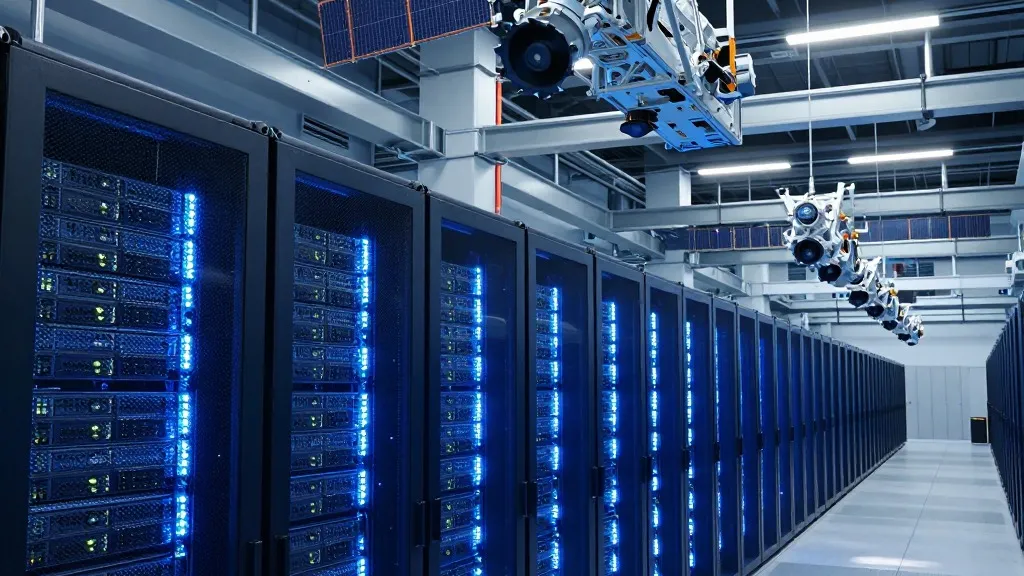
Capital spending plans revealed the scale of the infrastructure buildout. Management indicated that fourth-quarter capital expenditures would range from $35 billion to $40 billion. These funds are primarily earmarked for AI compute infrastructure. Key sites for this expansion include Memphis and Southaven. The company aims to reach 2.5 to 3 gigawatts of nameplate compute capacity by the end of this year. Discussions also pointed toward a potential expansion to 13 gigawatts or more by the end of 2027.
Musk described the demand environment as relentless, noting that hyperscalers and other customers are securing capacity with aggressive timelines. Compute pricing currently supports payback periods of less than a year, with some scenarios suggesting returns in as little as six months. This rapid return on investment is a key factor in justifying the heavy upfront spending on data centers and hardware.
Several other operational highlights contributed to the bullish sentiment. Starship achieved recent orbital success and began V3 satellite deployments. Starlink momentum continued with pricing adjustments and enterprise growth. Adoption of the Grok Bot accelerated, and spectrum expansion plans were detailed. Additionally, special committees were formed to explore a possible combination with Tesla, adding another layer of strategic speculation to the narrative.
Analysts responded with a broad array of price target increases. JPMorgan more than doubled its target to $500 from $240 while maintaining an Overweight rating. Cantor Fitzgerald raised its target to $345 from $246. Barclays and Morgan Stanley both set their targets at $300. Citi, UBS, TD Cowen, Wells Fargo, and Clear Street also adjusted their figures upward, citing the strong quarterly print and accelerating AI expansion.
The market reaction was immediate. Shares closed at $147.79 on October 20. In early premarket trading on October 21, the stock jumped roughly 8 percent. This movement reflects greater conviction in the company's trajectory across launch, connectivity, and AI. While elevated spending remains a point of focus, the consensus has shifted toward viewing SpaceX as a high-growth technology powerhouse rather than just a space company.
Source: Teslarati · original report published
More Business · Buyer Beware · Report a business · Got a Story?