252 Palestinians killed in Israel in 2025 as minority votes
With 252 deaths last year and two million citizens heading to the polls, the Palestinian minority in Israel seeks to shape the next government through a bloc of 18 to 20 projected seats.
By Chloe Kapoor ·
252 people of Palestinian descent were killed in Israel in 2025, according to data cited by the Abraham Initiatives, an Israeli civil society organization. This figure marks the deadliest year on record for the community, which currently numbers approximately two million people and comprises about one-fifth of the country's total population.
The victims included men, women, and children, many of whom were not involved in criminal activity. The death toll in the Palestinian community has risen sharply in recent years. In 2022, 116 people were killed. By 2023, that number had climbed to 244. The surge in fatalities has intensified scrutiny of how Israeli authorities manage security in these neighborhoods.
Political leaders and activists link the violence to under-policing and strained relations between local residents and the Israel Police. A 2024 report from the Abraham Initiatives found that police solved fewer than 15 percent of homicides in Palestinian communities. By comparison, the clearance rate for killings of Jewish victims stood at approximately 65 percent. Community representatives have also accused police of allowing the illegal arms trade to flourish, while the Israeli government denies direct responsibility for the crime crisis.
These issues sit against a backdrop of long-standing legal distinctions that separate Palestinian citizens from their Jewish counterparts. Adalah, a Haifa-based legal center, has identified more than 65 laws enacted since 1948 that explicitly or implicitly discriminate against Palestinians. These statutes cover land ownership, housing, public funding, and family reunification. The 2018 Nation-State Law, for example, designates Israel as the nation-state of the Jewish people and downgraded Arabic to a language with special status rather than an official one.
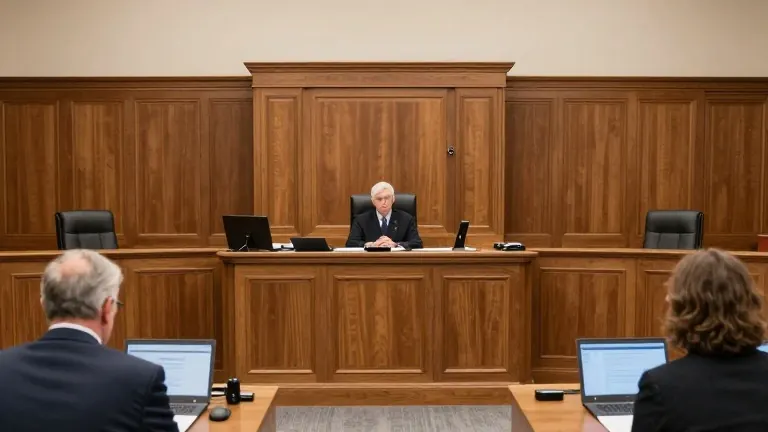
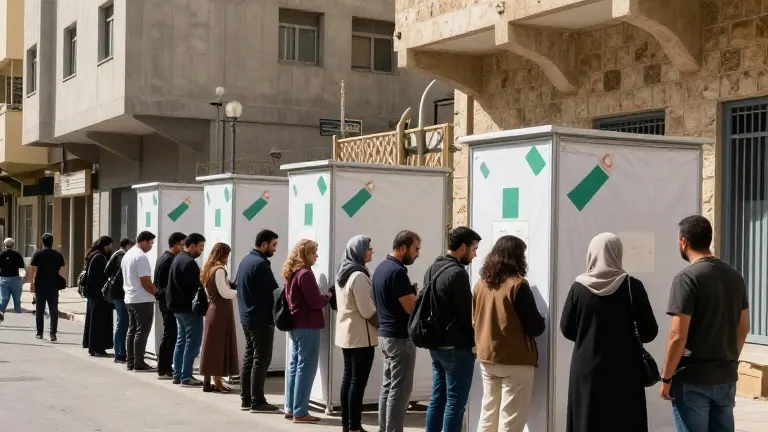
Despite these structural barriers, the Palestinian minority is mobilizing for the general election scheduled for Tuesday. Two main alliances are entering the race: the Joint List, which reunites Hadash, Balad, and Ta'Al, and Ra'am, which is running independently. Projections suggest these two blocs could secure between 18 and 20 seats in the Knesset. This potential representation would position them as key players in coalition negotiations.
The political landscape for this minority has evolved since the 1948 Nakba, when about 150,000 Palestinians remained within the newly established borders of Israel. For nearly two decades, they lived under military rule, a regime that imposed curfews and movement restrictions exclusively on them. That era ended in 1966, but state violence persisted, including the 1956 Kafr Qasim massacre where 49 civilians were shot, and the 1976 Land Day protests that killed six demonstrators.
In 2021, Ra'am joined a governing coalition, breaking a long-standing taboo against partnering with Palestinian-led parties. That move helped end a 12-year period of Prime Minister Benjamin Netanyahu's leadership. As voters head to the polls this week, the outcome will determine whether this minority can again influence the formation of the cabinet and the direction of national policy.
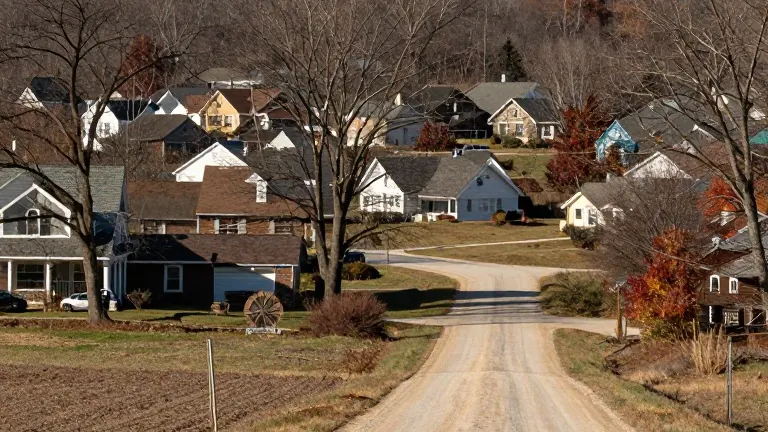
The community is divided across the north, central, and southern regions, with about 80 percent of its population Muslim, 10 percent Christian, and 10 percent Druze. While they hold citizenship, many continue to describe their status as secondary in a state defined by majority demographics.
Source: Middle East Eye