Brazil's Electoral Tug-of-War: Lula's Fourth Term Amid Legal Clouds
Voting hour extensions and transport disputes cast a shadow over the incumbent's narrow victory, setting the stage for immediate judicial battles.
By Elizabeth Morales ·
The outcome of Brazil’s presidential runoff was settled by a margin of roughly three percentage points, but the path to victory was obscured by procedural disputes that erupted in the final hours of voting. President Luiz Inacio Lula da Silva claimed a record fourth non-consecutive term on Sunday, defeating Senator Flavio Bolsonaro with more than 51 percent of the vote against the senator’s 48 percent. The result was not confirmed until 98.76 percent of ballots were counted, leaving the nation in suspense as regional data trickled in.
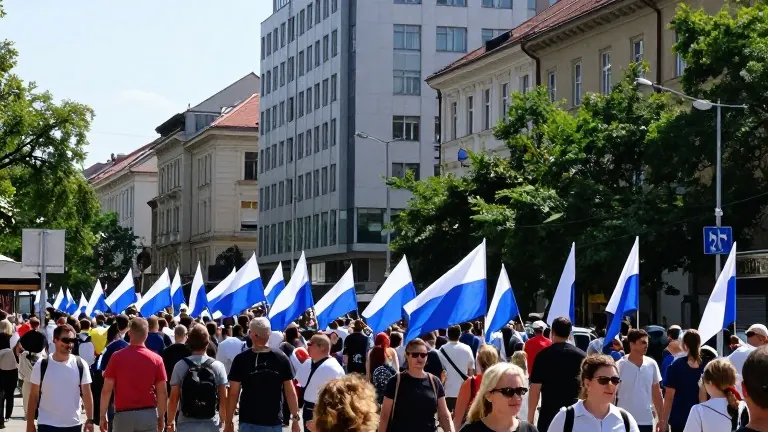
Lula’s victory is a statistical anomaly in modern Brazilian politics. No candidate had ever reversed a first-round deficit to win the presidency in a runoff. On October 4, Flavio Bolsonaro had defeated the incumbent by 1.87 percentage points, a gap representing 2.2 million votes. In the intervening three weeks, the incumbent’s campaign targeted voters who had abstained in the first round, where an estimated 33.4 million eligible citizens, or 21 percent of the electorate, did not cast a ballot. The highest abstention rate in a general election since 1998 suggests that mobilizing these absent voters was a decisive factor in the turnaround.
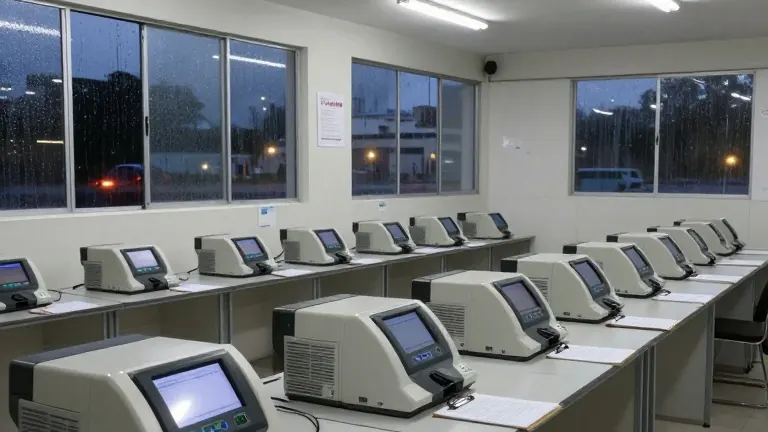
The final stretch of the election was marked by a last-minute extension of voting hours that both campaigns had requested. Lula’s team argued that local officials had reduced public transport services, hindering lower-income voters in urban centers. Flavio Bolsonaro’s camp sought additional time for regions impacted by heavy rain and flooding. Supreme Court Justice Cristiano Zanin ordered polling stations to remain open until 7pm, two hours later than the original 5pm deadline. The decision created confusion because some stations had already closed and powered down their electronic voting machines. Zanin clarified that only stations still open could continue accepting voters, a distinction that led to disputes at polling locations across the country.
Flavio Bolsonaro has already pledged to challenge the result in court, accusing Justice Zanin of judicial malfeasance. The senator cited the late extension as a source of voter confusion and stated that the circumstances were unacceptable. In a brief post-election address, Bolsonaro said, “He changes the rules of the game mid-game.” The Federal Police are currently investigating alleged transport disruptions in five states. In Salvador, a court ordered the arrest of the city’s transport secretary over allegations that he directed cuts to bus services, an incident Lula’s camp used as evidence of interference.
The election outcome also shifts the diplomatic balance in Latin America. The Trump administration has historically supported the Bolsonaro family, with officials in the State Department reportedly pushing for sanctions against Brazil to weaken Lula’s government. Donald Trump Jr expressed outrage over the voting extension on social media, suggesting that the mainstream media was silent because the move was “for the cause.” While President Trump declined to name a preferred candidate, he told reporters that the United States was “watching.” Lula’s campaign has long framed the election as a defense of national sovereignty against foreign interference, a theme that resonated with voters concerned about the impact of U.S. tariff policies and the legal proceedings against Jair Bolsonaro.
The internal divisions within Brazil’s judicial system may determine how quickly the new term begins. Al Jazeera correspondent Monica Yanakiew noted that the courts are fractured, with significant rifts within the Supreme Court. She predicted that a substantial amount of political negotiation would be required to resolve the legal challenges. For now, the focus remains on the logistical and legal details that could delay the transition of power, even as Lula’s supporters celebrate a victory that defied pre-election polling.
Source: Al Jazeera