SpaceX turns down three military launch bids
The refusal frees up contracts for competitors while a NASA panel warns Starship may need 22 refuelings for lunar missions.
By Joseph Jenkins ·
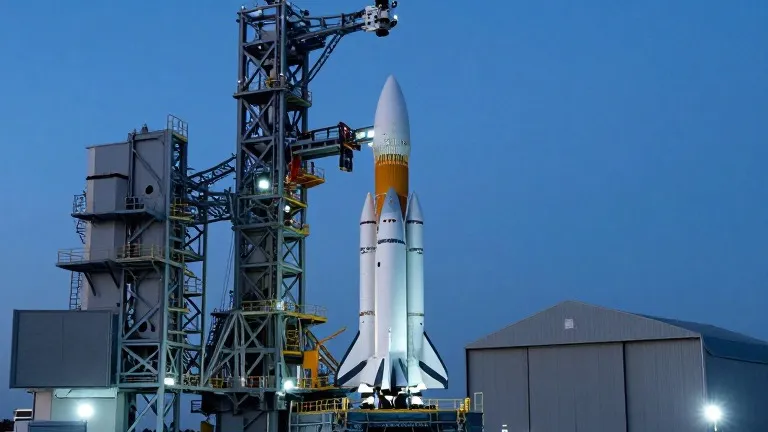
The United States Space Force lost three launch opportunities this week after SpaceX declined to accept the offered contracts. According to the October 23 edition of the Rocket Report, the company told military officials it would not take the deals. This decision shifts immediate workload away from the dominant launch provider, potentially altering revenue streams for competing firms in the commercial space sector.
The refusal is one of two major developments involving SpaceX reported on Thursday. The second issue concerns the company’s flagship heavy-lift vehicle. A NASA safety panel indicated that the Starship rocket might require as many as 22 in-orbit refueling events to support a lunar landing. This high number suggests the mission architecture poses substantial technical challenges for the crewed Artemis program.
The timeline for these events spans several months of planning and recent announcements. SpaceX has been the primary provider for many government launches, but its recent posture suggests a selective approach to military work. The Space Force had prepared these specific offers, expecting acceptance based on historical patterns. The decline forces the agency to redistribute the launch capacity to other providers.
In Spain, a separate development in the launch industry is progressing. PLD Space reported that its Miura 5 rocket is nearing final integration. The company targets its first launch before mid-2027. CEO Raúl Torres stated on October 19 that the firm has built three Miura 5 vehicles. Two of these are designated for qualifying key system elements, while the third is the operational launch vehicle.
Torres explained that manufacturing all three units simultaneously allowed engineering teams to work continuously across production and integration stages. He noted that lessons learned from each qualification campaign are being applied directly to the launch vehicle. This strategy aims to reduce development risks by testing systems in parallel rather than sequentially.
One second stage of the Miura 5 is now fully integrated. This component is currently at PLD’s test facility in Teruel. The stage will undergo a qualification campaign that includes a wet dress rehearsal and a static hot-fire test. These tests are designed to simulate representative operating conditions before the vehicle attempts orbit.
In Canada, Reaction Dynamics is seeking new capital to expand its operations. The company plans to raise $350 million to grow its workforce from 68 employees to more than 350. The funds will support the development of Aurora, a small-lift rocket targeted for orbit in 2028, and Borealis, a medium-lift vehicle planned for debut by 2031.
Source: Ars Technica
More Business · Tech news · Buyer Beware · Report a business · Got a Story?