Ukraine Restores Critical Military Satellite Links
Ukrainian forces have regained full access to Starlink communications ten days after sudden speed caps disrupted frontline operations and drone defense.
By Joseph Jenkins ·

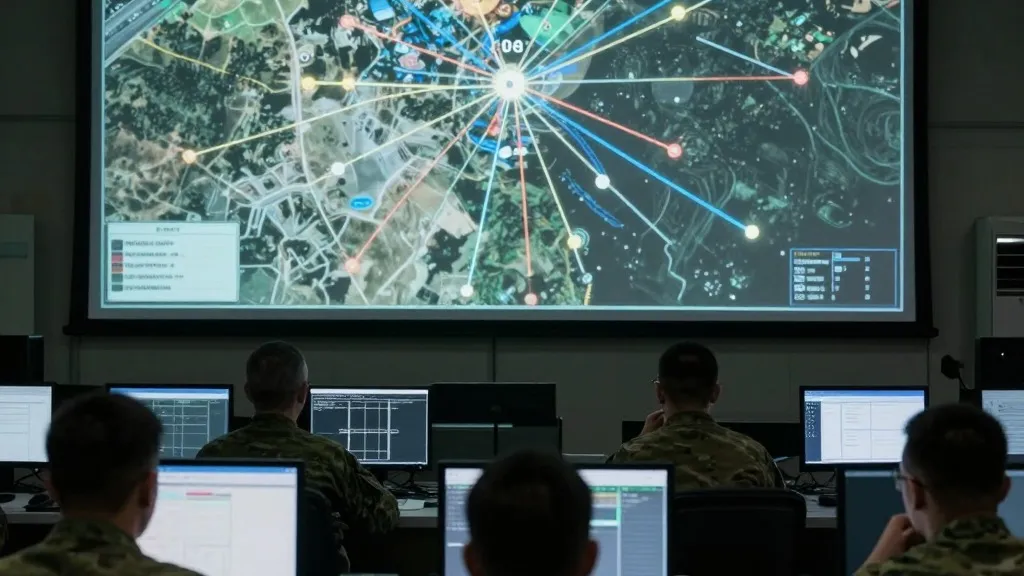
For the first time in ten days, ordinary Ukrainians on the front lines can rely on their communication networks to function as intended. The government confirmed on Saturday that the military now enjoys a stable connection to the Starlink satellite system, ending a period of sudden and severe speed limits that had hindered critical defense efforts. This restoration allows troops to maintain the high-speed data flow necessary for coordinating logistics and intercepting enemy threats without the artificial barriers imposed earlier this month.
The disruption began abruptly when the terminals, which are manufactured by Elon Musk’s SpaceX but managed by the United States government, were capped at a speed of 160 kilometers per hour. This restriction proved to be a significant operational challenge for Ukrainian forces. Military officials reported that several combat missions failed during the restricted period. The reduced bandwidth specifically hampered the ability to track and intercept Russian attack drones. Additionally, some planned operations to strike targets deep behind enemy lines were cancelled entirely due to the lack of real time data.
The impact of the slowdown extended beyond the battlefield. Russia was able to launch ballistic missiles at Ukrainian targets without receiving any advance warning from American intelligence agencies. The timing of the restrictions coincided with President Donald Trump’s announcement of a deal for the United States to purchase Russian diesel. This temporal alignment added a layer of complexity to the diplomatic and military relationship, raising questions about the underlying motivations for the technical changes.
In the days following the restrictions, the two sides of the Atlantic offered differing accounts of responsibility. President Trump initially suggested that his administration was not directly behind the decision to cut intelligence sharing. He stated that he did not know who was responsible but insisted it was not him and did not believe it was Elon Musk. This statement set the stage for a public exchange between the American administration and the tech executive.
Secretary of State Marco Rubio appeared to deflect blame toward the private sector when he defended the president last Wednesday. Rubio noted that the president does not run SpaceX and therefore cannot direct its daily operations. He emphasized that decisions regarding Starlink and the related Starshield system are made by the company’s leadership, not the White House. This position contrasted sharply with the statements made by the company’s chief executive.
Elon Musk, in turn, placed the responsibility squarely on the American government. Writing on social media last week, he asserted that the systems are owned and controlled by the United States government. He explained that any limits on speed or usage are decided by the US military and ultimately by the president. Vice President JD Vance supported Musk’s position on Thursday, suggesting that the billionaire does not wish to get caught in the middle of a war between two state actors without clear direction from Washington.
Ukrainian President Volodymyr Zelenskyy took a different view, blaming both parties for the disruption. He described the event as a message from the American government to limit speed, which was then technically executed by SpaceX. Zelenskyy pointed out that Starshield terminals in European Union countries did not face similar restrictions, indicating that the limits were applied specifically to Ukraine. He characterized the move as a planned operation and warned that such decisions could lead to human losses on the ground.
The situation began to clarify on Saturday when Zelenskyy announced the restoration of the system in a video address. He thanked his US allies, including the State Department and President Trump, for resolving the issue. The restoration began overnight, and by morning, speeds were sufficient for operational use. This return to pre-restriction levels is crucial for frontline logistics and for the defense against jet powered drones known as Shaheds.
Earlier in the week, the status of the repairs was less certain. On Thursday, President Trump claimed the service was back at full speed, but a European official disputed this, telling the Associated Press that the system was not fully functioning. When asked on Friday if he would instruct Musk to stop interfering with Ukraine’s access, Trump said he had not spoken to the billionaire but might have to. He assured the public that if there is a problem, he will get it straightened out, while also describing Musk as very brilliant and very good.
Source: The Guardian