Syria Bars Women From Military Colleges
New admission rules force female students to move provinces or switch universities, while officials explain the shift as a continuation of older military traditions.
By Chloe Kapoor ·
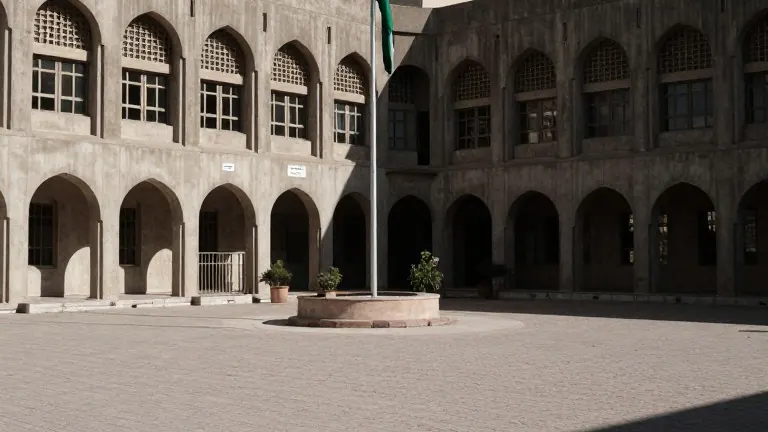
Twenty years. That is the minimum service commitment required of graduates from the Syrian University for Security Sciences. For Lin Najab, a 23-year-old mechatronics engineering student in Damascus, this new rule threatens to dismantle her academic plan. Earlier this October, the Syrian Ministry of Education announced regulations for two newly formed institutions: the National University of Defense Sciences and the Syrian University for Security Sciences.
The new policies restrict the majority of courses at the security university to men, while the defense university limits specific programs to male students. Najab, one of the few women in her engineering program, now considers moving to another province to continue her studies at a generalist university. "Now I have to start thinking about other options," she said. "For example, I might have to move to another province to study."
Relocating presents practical challenges. Student dormitories are often uncomfortable, and living alone as a young woman is viewed with suspicion by conservative families. Najab noted that parents often oppose their daughters studying far from home for security reasons or simply because they do not want them away. "Even if a girl decides she won't give up.. her parents will be opposed to the idea," she explained.
The exclusion of women from these specific tracks has generated debate across Syria. Fatoun Kharbatli, an activist from Aleppo, argued that ability should dictate field selection, not gender. "A person should choose the field in which they see their abilities as lying," she said. Qamar al-Yaser, a mother of three in rural Damascus, supported the ban. She stated that the sectors require "a strong physique" and often involve staying overnight at remote sites, conditions she believes suit men more than women.
The admission rules appear designed to keep women out of the military rather than just specific academic subjects. Students at the National University of Defense Sciences must serve in the Syrian military. Those graduating from the security university must commit to up to 20 years with the internal security forces. Human Rights Watch criticized the move in a statement released days after the announcement. The organization called the rules discriminatory and part of a pattern restricting women's roles in state institutions.
The gender-based restrictions extend beyond the military colleges. New rules also limit female enrollment at a railways institute in Aleppo and oil and gas training organizations in Rmeilan, Homs, Deir el-Zour, and Baniyas. In Idlib, a radio and television course is now restricted to men. Conversely, kindergarten, nursing, and midwifery training programs are now designated as women-only.
These changes coincide with edits to school textbooks for the 2026-2027 academic year. The ministry removed images associated with the previous regime of Bashar al-Assad. Journalists also observed that pictures of females with uncovered hair were altered to show headscarves. A statue previously depicted without a top was edited to wear a vest, and images of men dancing were removed.
Officials stated that some gender-exclusionary rules at the new security institutes were carried over from the Assad-era colleges merged into the new institutions. A 2024 study by the Middle East Institute reported that while many Arab countries allow women in military colleges, they are often restricted to non-combat roles. The Syrian Center for Defense and Security Studies confirmed in a policy paper this year that women in Syrian security services have historically served in a "limited and largely symbolic capacity."
Dina Arakji, author of the Middle East Institute study, argued that gender diversity in the security sector helps citizens perceive equality in national duties. Rana al-Ash, a Syrian activist, wrote that admission bans signal what women can and cannot do, making it harder to confront societal expectations. Nadra Bunni, an analyst at the Middle East Institute Switzerland, noted that it is unclear if these restrictions will become permanent features of the new state.
The reaction to the admissions ban has raised questions about how Syria's new authorities handle public dissent. Bunni asked if the government will institutionalize the expectation that decisions can be questioned and reversed, or if it will teach citizens that their voices carry little consequence.
Source: Deutsche Welle